Choosing the Right Play Group
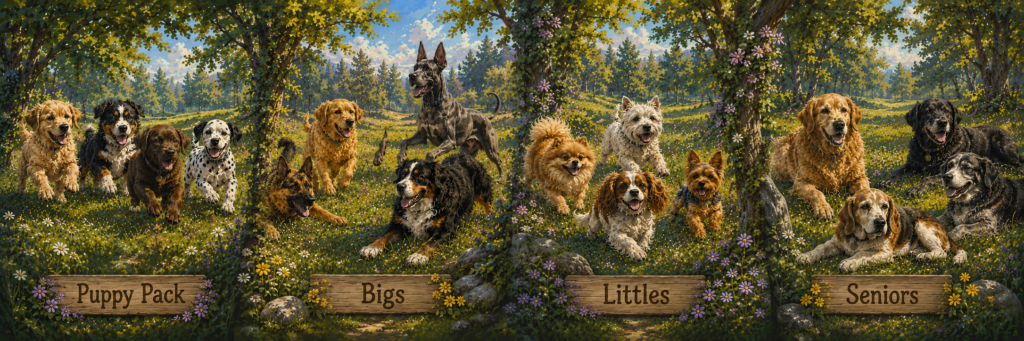
At Dogpatch Resort, we carefully separate and group dogs based on size, age, and temperament to ensure safe, enjoyable play experiences. While we have primary categories—puppies, small dogs, and large dogs—we recognize that every dog is an individual. We regularly mix groups based on each dog’s personality and needs, rotating dogs throughout the day to provide variety and prevent boredom. Our approach prioritizes safety and well-being above all else.
Why We Separate Dogs Into Groups
One of the most important aspects of providing quality group care is understanding that not all dogs play the same way or have the same needs. A 120-pound Great Dane has different physical considerations than a 10-pound Chihuahua. A confident, high-energy Golden Retriever plays differently than an anxious rescue dog. A puppy’s play style is fundamentally different from an adult dog’s.
Separating dogs into thoughtful groups allows us to:
•Minimize injury risk from size mismatches
•Reduce anxiety for dogs who are uncomfortable with larger or smaller dogs
•Match play styles so dogs can genuinely enjoy themselves
•Provide appropriate supervision based on each group’s needs
•Create positive experiences that build confidence in social settings
Our Primary Categories
We organize dogs into three main categories based on size:
Puppies
Our youngest guests receive special attention and supervision. Puppies are learning how to interact with other dogs, and they need a controlled environment where they can play without being overwhelmed by adult dogs. Puppy groups allow for appropriate socialization while protecting them from accidental injury. A negative experience at a young age can color how a puppy interacts with other dogs as they age. It is an important time and we take it very seriously.
Small Dogs
Small dogs typically weigh under 25 pounds. This group includes toy breeds, small mixed breeds, and any dog that falls into this size range. Small dogs often have different play styles and energy levels than larger dogs, and they benefit from playing with dogs of similar size.
Large Dogs
Large dogs typically weigh over 25 pounds. This group includes everything from medium-sized dogs to giant breeds. Large dogs have different space requirements and play styles, and they benefit from interacting with dogs of similar size and strength.
Beyond Size: Personality and Play Style Matter Most
These three categories are just our starting point. What really determines grouping is personality and play style.
We have rowdy dogs—the high-energy, enthusiastic players who love rough-and-tumble play, chase games, and constant interaction. These dogs need other dogs who can match their intensity and won’t be intimidated or overwhelmed by their exuberant style.
We also have calmer sniffers—the dogs who prefer a more relaxed pace, who enjoy exploring and sniffing, who like gentle interactions, and who can become stressed by constant high-energy play. These dogs thrive with other calm dogs who respect their quieter play style.
And we have everything in between.
A rowdy small dog might actually be more compatible with a calm large dog than with another small dog. A calm large dog might genuinely prefer the company of small dogs who won’t challenge them to constant high-energy play.
This is why we don’t just look at size. We look at personality. We look at play style. We look at what makes each individual dog feel safe, comfortable, and genuinely happy.
The Reality: Every Dog Is an Individual
Here’s where it gets interesting—and where our experience really matters.
We regularly have large dogs in our small dog groups. Why? Because we’ve met 60-pound Golden Retrievers who are anxious around other large dogs and genuinely feel safer playing with smaller, calmer companions. These dogs often have a gentler play style and actually prefer the company of smaller dogs. Putting them with large, boisterous dogs would stress them out, not benefit them.
We also regularly have small dogs in our large dog groups. Some small dogs have the confidence and play style of a much larger dog. They’re bold, energetic, and genuinely enjoy the rougher play that comes with larger dogs. Keeping these dogs only with other small dogs would actually bore them and frustrate them.
The point is: size is just one factor. Temperament, confidence level, play style, energy level, and individual personality matter just as much—sometimes more.
How We Determine Grouping
When your dog arrives at Dogpatch, we take time to understand them. We ask questions:
•How does your dog play with other dogs?
•Is your dog anxious around larger or smaller dogs?
•What’s your dog’s energy level?
•Does your dog have any social preferences or concerns?
•What’s your dog’s history with group play?
We also observe. We watch how your dog interacts with other dogs, what their body language tells us, and what seems to make them comfortable or uncomfortable. Over time, we learn each dog’s personality and preferences.
Based on this information, we place your dog in a group where they’ll thrive—not just survive. Sometimes that’s with dogs their size. Sometimes it’s not.
Rotation Throughout the Day
Your dog doesn’t spend the entire day in one group. We rotate dogs throughout the day for several important reasons:
Prevents Boredom: Playing with the same group of dogs all day can become monotonous. Rotation provides variety and keeps play sessions fresh and engaging.
Reduces Conflict: Sometimes even well-matched groups can develop tension if they’re together too long. Rotating prevents fatigue and irritability from building up.
Provides Different Experiences: Some rotations might be more active and playful, while others are calmer. This variety enriches your dog’s day and prevents overstimulation.
Allows for Individual Attention: Rotation gives us opportunities to work one-on-one with dogs on specific skills, provide enrichment activities, or simply give them a break from group play.
Matches Energy Levels: A dog might be high-energy in the morning but need a calmer group in the afternoon. Rotation allows us to adjust based on how your dog is feeling that day.
Our Commitment to Safety and Well-being
We take the responsibility of grouping seriously because we understand what it means: your dog’s safety, comfort, and happiness are in our hands.
Every decision we make about grouping is based on one principle: What’s best for this individual dog? Not what’s easiest for us. Not what fits neatly into categories. What’s actually best for your dog.
We’re diligent about monitoring play, watching for signs of stress or discomfort, and adjusting groups as needed. If a dog isn’t thriving in their current group, we change it. If a dog needs a break from group play, they get one. If a dog needs to work with a specific group of dogs to build confidence, we make that happen.
Your dog deserves to feel safe, respected, and enjoyed at Dogpatch. Our grouping strategy is designed to make sure that happens.
What You Might Observe
When you pick up your dog, you might notice:
•Your small dog played with some large dogs today
•Your large dog spent time with a calm group of smaller dogs
•Your dog played with different groups throughout the day
•Your dog had some one-on-one time with our staff
This isn’t random or haphazard. It’s intentional, thoughtful, and based on what we know about your dog and what we believe will make their day at Dogpatch the best it can be.
Communication Is Key
If you have concerns about how your dog plays with other dogs, or if you have specific preferences about grouping, please let us know. We want to understand your dog as fully as possible so we can provide the best care.
Similarly, if you notice something about your dog’s behavior or preferences that might affect their grouping—maybe they’ve become anxious around larger dogs, or they’ve developed a new friendship with a specific dog—tell us. We adjust based on what we learn.
Our Commitment to Your Dog and Your Family
At Dogpatch Resort, we believe that every dog deserves to have a positive, safe, and enriching experience in group play. Our grouping strategy isn’t one-size-fits-all because dogs aren’t one-size-fits-all.
We’re committed to understanding your dog as an individual, grouping them thoughtfully, rotating them throughout the day to provide variety and prevent stress, and always—always—prioritizing their safety and well-being.
That’s what you and your dog can expect from us.